Neurological conditions in children — therapy and support
Sometimes a child’s brain does not work quite as it should. At HOME4MOTION Kids we support your child with an experienced interdisciplinary team — with sensitivity, through play and in line with current research.
When the brain works differently — what that means for your child
Neurological conditions in childhood cover a wide range of disorders of the central or peripheral nervous system, including disorders of brain development, genetic syndromes, inflammatory processes and structural malformations. These can lead to difficulties with motor function, cognition, perception, language and the regulation of bodily functions. Course and severity depend strongly on the underlying cause.
Children with neurological conditions often find that movement, perception, concentration or communication do not come naturally. Everyday situations such as playing, learning or being with others may need more support. Many families live between therapy, adapting and the wish for a childhood that is as unburdened as possible. That is exactly why every child needs an individual therapy plan.
What children with neurological conditions experience
Neurological conditions can affect motor skills, perception, development and independence in daily life — often in very individual ways.Coordination: movement sequences are uncoordinated.
Sensory processing: over- or under-responsive to input.
Cognition: learning and understanding need more time.
Language & communication: delayed or affected.
Trunk control: sitting and head control are harder.
Motor skills: grasping, standing and walking are difficult or delayed.
Behaviour: changed responses to sensory input.
Swallowing & eating: dysphagia is possible.
Many parents first notice that their child is not reaching motor milestones, or is reaching them considerably later than others of the same age. Unusual movement patterns, difficulties with swallowing or delayed language development can also be early signs.
Our therapy for Neurological conditions
Our interdisciplinary therapy supports motor development, perception and independence specifically, matched to what each child needs.
Physiotherapy
Building motor development with Bobath, Vojta and functional training.
More on physiotherapy →Occupational therapy
Everyday abilities, fine motor skills, planning and sequencing, school readiness.
More on occupational therapy →Speech and language therapy
Orofacial therapy, building language and AAC where needed.
More on speech and language therapy →Neuro-orthopaedics
Interdisciplinary coordination with Dr Švehlík.
More on Neuro-orthopaedics →Intensive therapy
Intensive, tägliche Therapie nutzt Neuroplastizität gezielt zur Förderung von Motorik, Sprache und Wahrnehmung. Physio-, Ergo- und Logopädie arbeiten interdisziplinär, Eltern werden aktiv eingebunden und erhalten ein strukturiertes Heimprogramm.
Learn more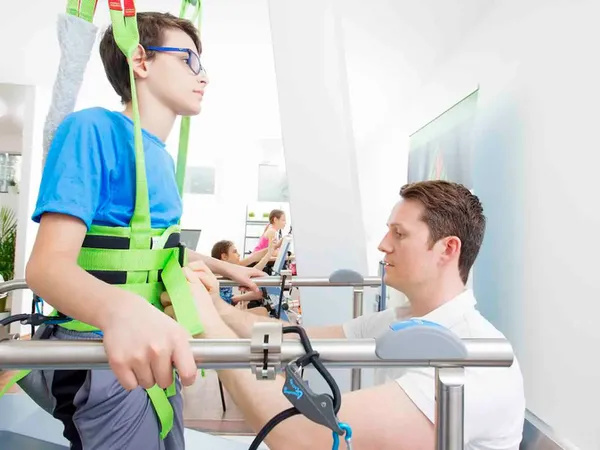
Using windows of neuroplasticity deliberately
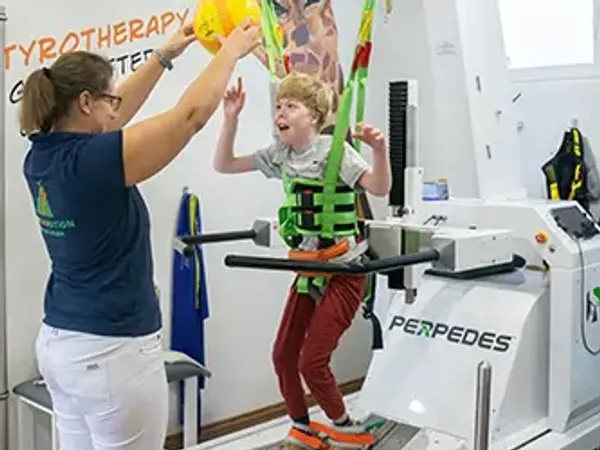
Intensive daily therapy uses neuroplasticity specifically to build motor skills, language and perception. Physiotherapy, occupational therapy and speech and language therapy work across disciplines, parents are actively involved and receive a structured programme for home.
Do you have questions about neurological therapy for your child?
Get to know us in a free information session — by phone, online or in person in Graz or Vienna.
One step changes everything
Read the stories of small fighters who take on every step with courage and delight in every bit of progress, however small. Real families, real journeys — and many moments that show how much is possible.
Children’s therapy in Graz & Vienna
HOME4MOTION Kids Graz
HOME4MOTION Kids Wien
Was Sie wissen möchten
Taking the next step together.
In the free initial consultation we look together at where your child is now and how we can best support them.