Speech and language therapy for children — speaking, swallowing and communicating more easily
Is your child barely speaking yet? Speaking unclearly, lisping or stuttering? Having difficulty eating? We look closely and provide targeted support – playfully, patiently and without a waiting list. You don't need a diagnosis for this.
Speech and language therapy for children that genuinely helps
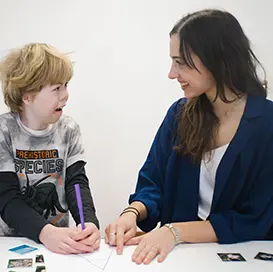
Most children come to us without a diagnosis. Because at two they are barely speaking. Because others don't understand them. Because they lisp, stutter or cannot form certain sounds. Because their vocabulary isn't enough for kindergarten or their grammar remains shaky. Because their mouth is constantly open, their tongue sits wrongly or the braces aren't working. All of these are good reasons for speech and language therapy – and none of them needs a label.
Our speech and language therapy for children in Graz and Vienna supports children from around 18 months into adolescence: language development and vocabulary, articulation and intelligibility, fluency, voice, oral motor skills and myofunctional therapy, eating and drinking. We work playfully, evidence-based and together with parents.
And if your child has a neurological diagnosis – cerebral palsy, a muscular disease, a genetic condition, prematurity – you are just as much in the right place. That is precisely what we have specialised in since 2018. Every child who comes to us benefits from this experience.
Speaking, understanding, being heard – we accompany your child step by step.
- delayed language development and building vocabulary
- swallowing and feeding difficulties (dysphagia) from infancy
- unclear pronunciation and speech disorders (dysarthria)
- restricted voice and facial movement
- severe communication impairment – with AAC
What we can do for your child
From early language support to specialised therapy – for children of all ages, with and without a diagnosis.
Language therapy
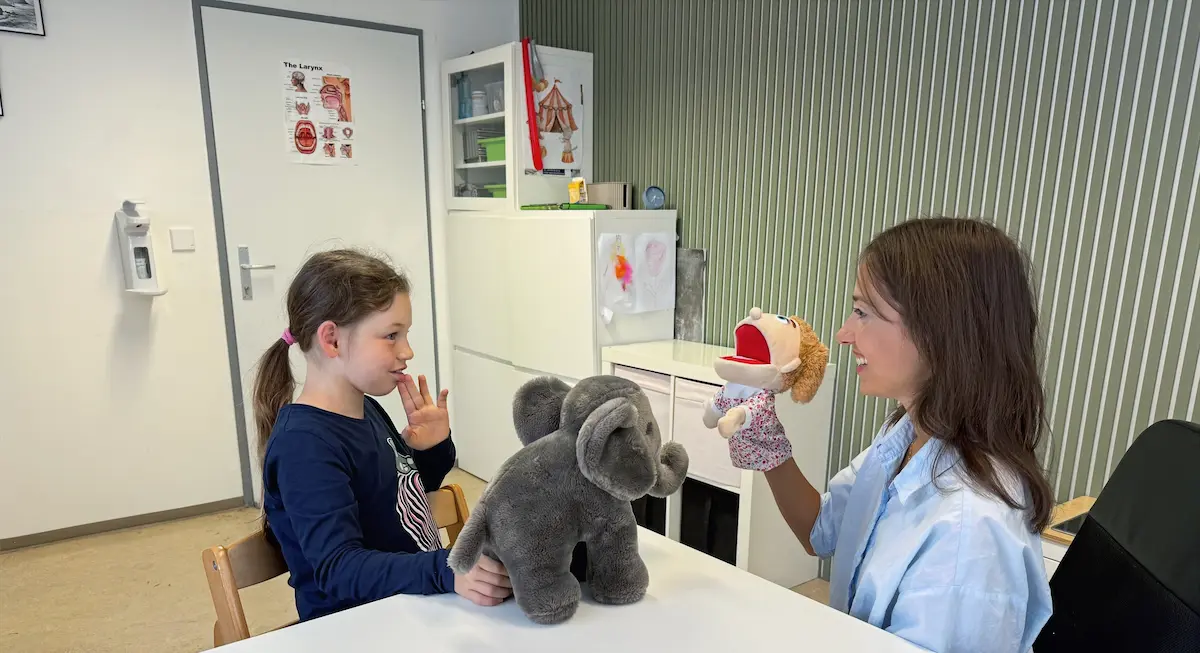
When speech is slow to come. Building vocabulary, forming sentences, understanding and being understood – for late talkers and children with delayed language development.
Find out more →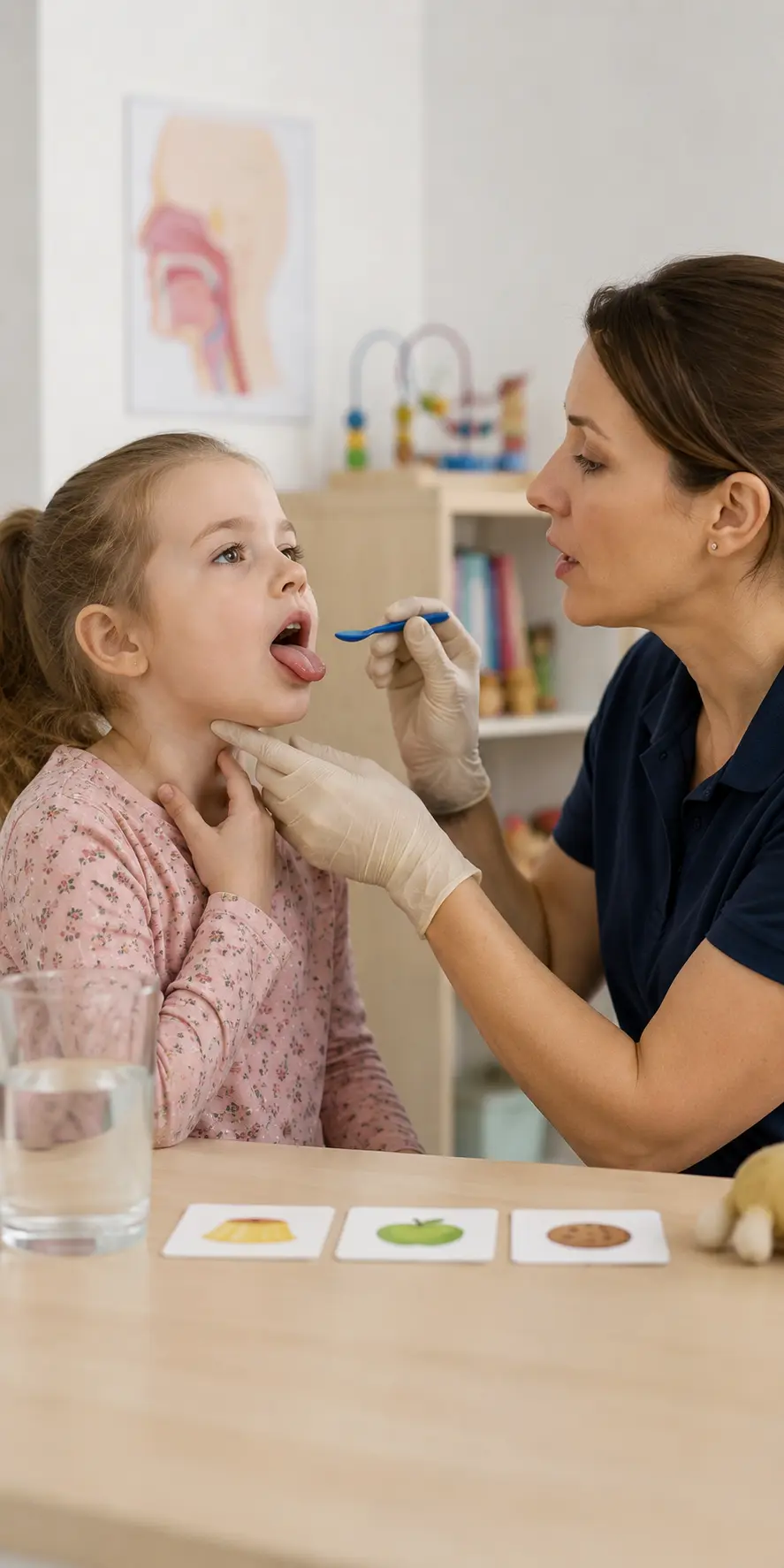
Swallowing therapy
When eating and drinking are difficult. From feeding and drinking problems in infancy to choking and food refusal at school age.
Find out more →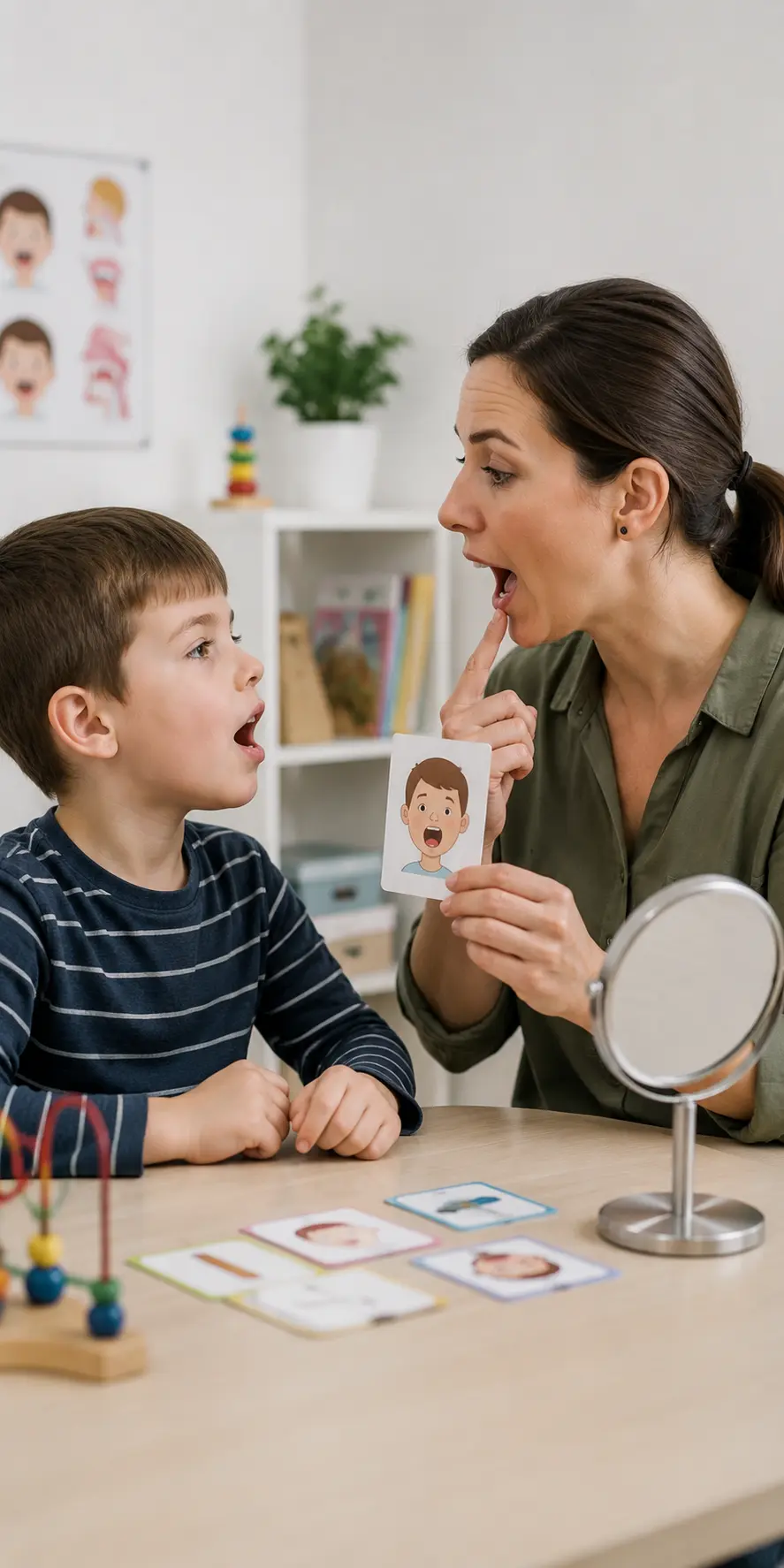
Speech therapy
When others don't understand your child. Articulation and sound formation, lisping, stuttering, speaking rate – plus myofunctional therapy for tongue, lips and mouth closure.
Find out more →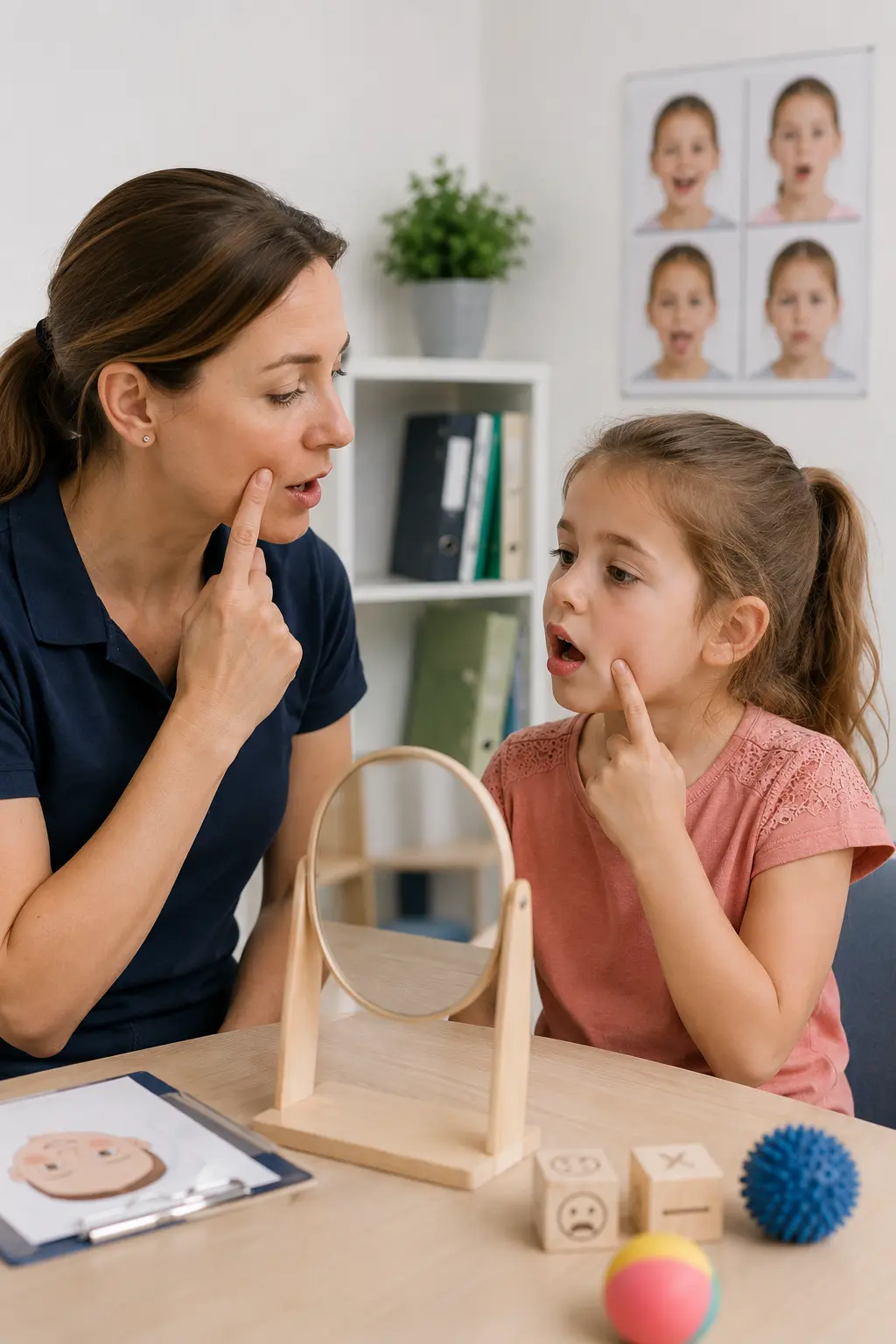
Voice therapy
When the voice won't play along. For persistent hoarseness, a very quiet or strained voice – and for facial palsy.
Find out more →Myofunktionelle Therapie
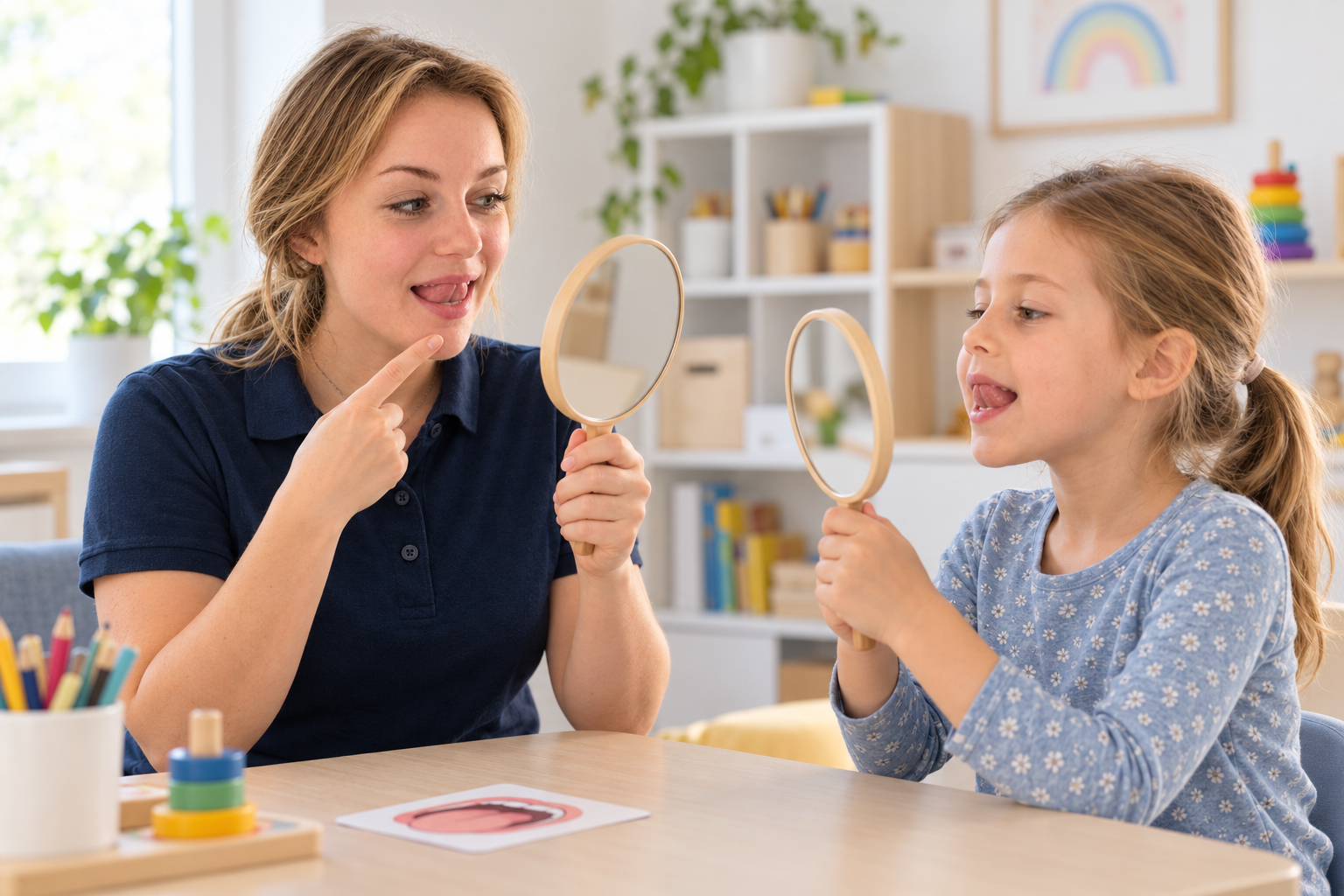
Die Zunge liegt im Ruhezustand nicht am Gaumen, der Mund steht dauerhaft offen, beim Schlucken drückt die Zunge gegen die Zähne: Das wirkt sich auf Aussprache, Zahnstellung und Kieferwachstum aus. Wir erarbeiten mit Ihrem Kind eine physiologische Zungenruhelage, sicheren Mundschluss, Nasenatmung und ein korrektes Schluckmuster.
🦷 Begleitend zur Zahnspange – damit sich die Zähne danach nicht wieder verschieben
👅 Nach einer Zungenbändchen-Operation
😮 Bei dauerhafter Mundatmung und offener Mundhaltung
🗣 Bei Lispeln durch falsche Zungenlage
These signs are worth having assessed
Every child develops differently. But there are points of orientation – and if one of them is clearly missed, it is worth taking a closer look.
At 2 years
Your child speaks fewer than 50 words or does not combine two words (“mummy car”).
At 3 years
Strangers barely understand your child. Sentences stay very short or are missing altogether.
Articulation
Individual sounds are persistently missing, your child lisps or substitutes sounds (“tar” instead of “car”).
Fluency
Your child repeats syllables, gets stuck or avoids speaking – stuttering rarely stops on its own.
Mouth & tongue
The mouth is permanently open, your child breathes through the mouth, the tongue sits between the teeth – a case for myofunctional therapy.
Eating & drinking
Frequent choking, coughing while eating, very picky eating or extremely slow eating.
None of this applies but you are still unsure? Give us a call – the initial consultation costs nothing.
Lese-Rechtschreibschwäche
Lesen und Schreiben bauen auf Sprache auf: Wer Laute nicht sicher heraushört und sie den Buchstaben nicht zuverlässig zuordnet, kommt beim Lesen ins Stocken und schreibt unsicher. Genau an dieser sprachlichen Grundlage setzt Logopädie an – als Ergänzung zur schulischen Förderung, nicht als Ersatz.
Sicherheit beim Lesen und Schreiben aufbauen
Abstimmung mit Schule und Lerntherapie
Phonologische Bewusstheit: Reimen, Silben, Anlaute, Lautfolgen
Laut-Buchstaben-Zuordnung festigen
Hörtraining – wenn Zuhören schwerfällt
Manche Kinder hören gut und verstehen trotzdem schlecht. Der Hörtest beim HNO-Arzt ist unauffällig, aber im Alltag fragen sie ständig nach, überhören Arbeitsaufträge, verwechseln ähnlich klingende Laute und verlieren im lauten Klassenzimmer den Faden. Das Ohr funktioniert – die Verarbeitung im Gehirn nicht. Fachlich spricht man von einer auditiven Verarbeitungs- und Wahrnehmungsstörung (AVWS).Im Hörtraining üben wir genau diese Schritte: ähnliche Laute unterscheiden, Gehörtes in der richtigen Reihenfolge behalten, Wichtiges von Störgeräuschen trennen, länger konzentriert zuhören. Das Training ist spielerisch aufgebaut und wird laufend an den Stand Ihres Kindes angepasst.
Voraussetzung ist ein aktueller HNO-Befund – die Hörfähigkeit selbst muss vorher abgeklärt sein.
Unsure whether your child needs speech and language therapy?
That is exactly what the free initial consultation is for. You need neither a prescription nor a referral, and you don't have to commit to anything. We listen, give you our assessment and tell you honestly whether therapy makes sense – or whether waiting is perfectly fine. We currently have places available in Graz and Vienna.
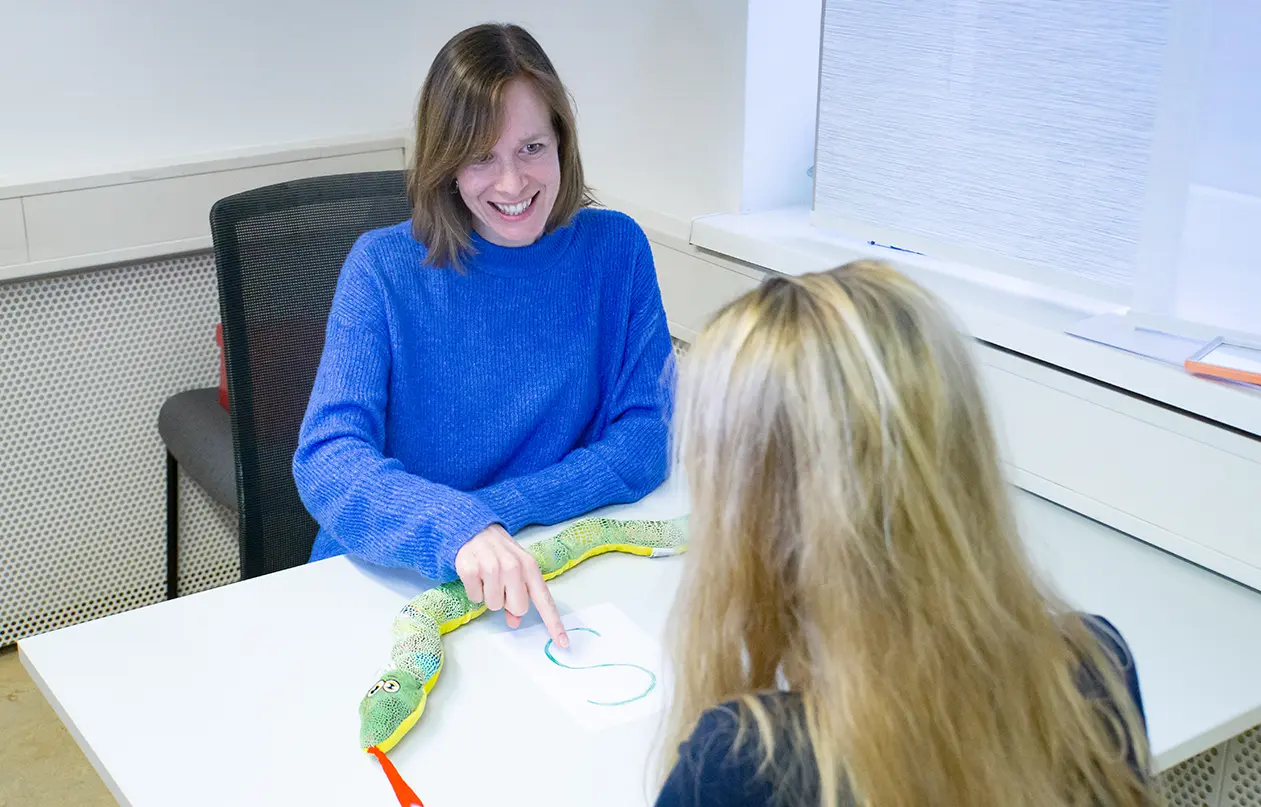
Why specialised speech and language therapy for children at HOME4MOTION Kids?
No year on a waiting list, no prescription required, no appointment in three months: as a private practice we can start quickly – often within a few days. The first consultation is free and without obligation.
Every child receives the same attention from us – whether they are “just” practising a few sounds or come with a complex diagnosis. Our speech and language therapists work closely with physiotherapy and occupational therapy in the same building, because language, motor skills and everyday life belong together. And because we have also been treating children with neurological conditions since 2018, we recognise early on when there is more behind a language difficulty – and when there isn't.
For children who are not yet speaking, we find interim routes: signing, picture cards or digital communication aids. So that your child can make themselves understood, even before the words arrive.
Practice at home – 10 minutes a day
Language therapy without parental involvement is only half as effective. After each session you receive concrete exercises for home – short, suited to everyday life and matched precisely to your child's current level.
Everything under one roof
Speech and language therapy, physiotherapy and occupational therapy in one building. If your child needs more than one area, you don't have to drive across town – and the therapists talk to each other.
Play-based and motivating
Children speak and practise most readily while playing. Our sessions are set up so that your child barely notices they are in therapy.
Starting early pays off
Early speech and language intervention makes the best use of a child’s neuroplasticity — the earlier we begin, the more effective the progress.
Conditions we treat
Choose your child's diagnosis for more on the therapy that suits.
Cerebral palsy
Häufigste motorische Behinderung im Kindesalter
Muscular conditions
SMA, Muskeldystrophien, Neuropathien
Genetic conditions
Down-Syndrom, Muskeldystrophien und weitere
Neurological conditions
Hirnentwicklungsstörungen, Enzephalitis, Fehlbildungen
Spinal conditions
Spina bifida (MMC), Myelopathien, Myelitis
Does your child have a different condition, or are you looking for therapy for an adult? Adults: therapie.home4motion.com →
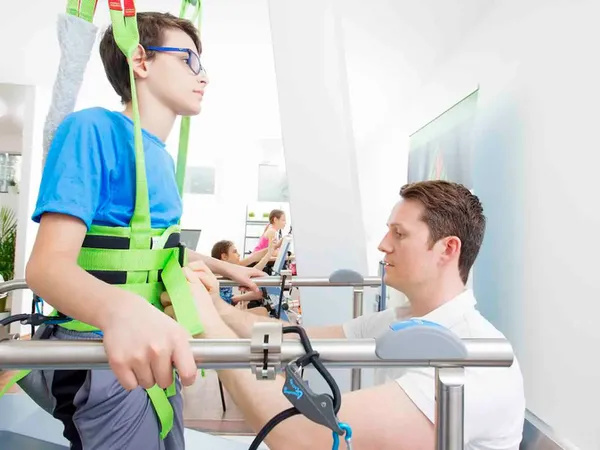
Intensive neurophysiotherapy in Graz & Vienna – one to three weeks
Intensive therapy for children is a modern and effective approach in rehabilitation, aimed at achieving noticeable progress in a short time. It is built on frequent, individually planned sessions that address each child’s needs and abilities directly. This makes the best use of developmental potential and strengthens motor, cognitive and communication skills alike.
Transparent prices for your therapy
Treatment matched to the individual — modern, considered as a whole, and transparent.
Speech and language therapy
- 🦖 Language development, articulation, lisping, stuttering, swallowing
- 🦖 Myofunctional therapy, mouth closure & tongue function
- 🦖 Leading methods & evidence-based children's therapy in Graz and Vienna
- 🦖 For infants, toddlers, school-age children & adolescents – including early speech and language support
Speech and language therapy Light
- 🚀 Ideal for children from around 18 months and for regular practice in between
What our clients say

Ein hervorragendes, innovatives Therapiezentrum. Insbesondere bei neurologischen Leiden sind die computergesteuerten Geräte mehr als wertvoll und hilfreich. Die höchstqualifizierten Physiotherapeut:innen begleiten professionell und stets freundlich durch die Therapieeinheiten.

Meine Erfahrung im HOME4MOTION Therapiezentrum in Graz war sehr gut. Wir verbrachten eine intensive Woche dort, und ich bin von dem Engagement für neurologische Patienten beeindruckt. Das Personal ist äußerst kompetent und einfühlsam – besonders auch bei Kindern.
Speech and language therapy for children in Graz and Vienna
HOME4MOTION Kids Graz
HOME4MOTION Kids Wien
A step closer to the first word.
In a free initial consultation we look together at where your child is now and where the path can lead. No referral is needed for a first conversation.