Genetic and chromosomal conditions — therapy for children
Every child with a genetic condition has their own strengths and their own challenges. At HOME4MOTION Kids we see the child first and the diagnosis second. We build on what is possible.
Genetic and chromosomal conditions — what they mean for development
Genetic conditions are changes in the genetic material that can affect embryonic development and bodily functions. They include chromosomal abnormalities such as trisomies and single-gene conditions such as fragile X syndrome (for example trisomy 21 — Down syndrome, trisomy 18, triple X syndrome). The clinical picture varies widely and can affect motor, cognitive, language and physical development to differing degrees.
Children with genetic conditions often follow very individual paths in their development. Movement, language, learning or social interaction may take a different course and need additional support. For children and their families this often means dealing with particular challenges while keeping their own strengths and their own steps forward at the centre. Early therapy matters in every genetic condition — a young child’s brain is still highly adaptable (neuroplasticity). The earlier physiotherapy, occupational therapy and speech and language therapy begin, the more potential your child can develop.
What children with genetic conditions experience
Conditions with a genetic cause often show themselves in a wide range of challenges around development and movement, which need individual support.Restricted movement: depending on the level, paralysis or weakness of the legs.
Pressure sores: a higher risk where mobility is limited.
Pressure sores where mobility is limited.
Swallowing may be affected where muscle weakness is severe.
Breathing is affected in SMA types 1–2 and in DMD.
Pace of learning: new movements need more repetitions.
Language & communication: delayed — common with Down syndrome and fragile X.
With Down syndrome the diagnosis is usually made at birth. Parents often notice pronounced low muscle tone, delayed motor milestones and slower language development — all areas where we can help specifically.
Our therapy for Genetic conditions
With individually combined approaches we support children who have genetic conditions in their development and build on their strengths.
Physiotherapy
Activating exercises, early mobilisation from infancy onwards.
More on physiotherapy →Occupational therapy
Materials made for children, building on their strengths.
More on occupational therapy →Speech and language therapy
Signing and picture communication where needed.
More on speech and language therapy →Neuro-orthopaedics
For related orthopaedic questions.
More on Neuro-orthopaedics →Intensive therapy
Intensivtherapie vor dem Schuleintritt und in Entwicklungssprüngen nutzt gezielte, spielbasierte Förderung, um motorische und sprachliche Fortschritte zu unterstützen. Eltern werden aktiv in den Therapieprozess eingebunden und begleiten die Entwicklung ihres Kindes im Alltag.
Learn more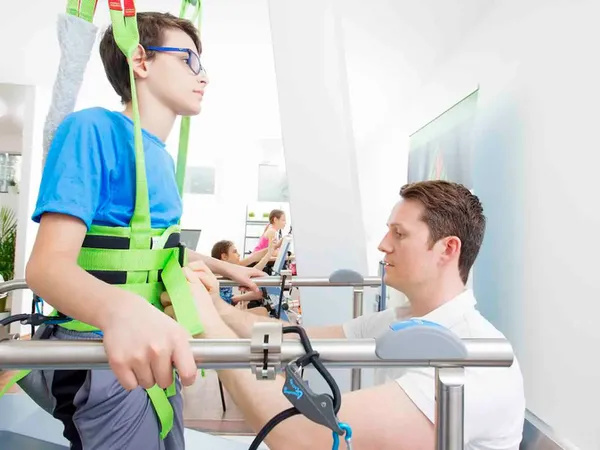
Using windows of neuroplasticity deliberately
Intensive therapy before starting school and during spurts in development uses targeted, play-based support to build motor and language progress. Parents are actively involved in the therapy process and support their child’s development in everyday life.
Do you have questions about therapy for your child with a genetic condition?
Even with rare diagnoses — do give us a call.
One step changes everything
Read the stories of small fighters who take on every step with courage and delight in every bit of progress, however small. Real families, real journeys — and many moments that show how much is possible.
Children’s therapy in Graz & Vienna
HOME4MOTION Kids Graz
HOME4MOTION Kids Wien
Was Sie wissen möchten
Taking the next step together.
In the free initial consultation we look together at where your child is now and how we can best support them.